





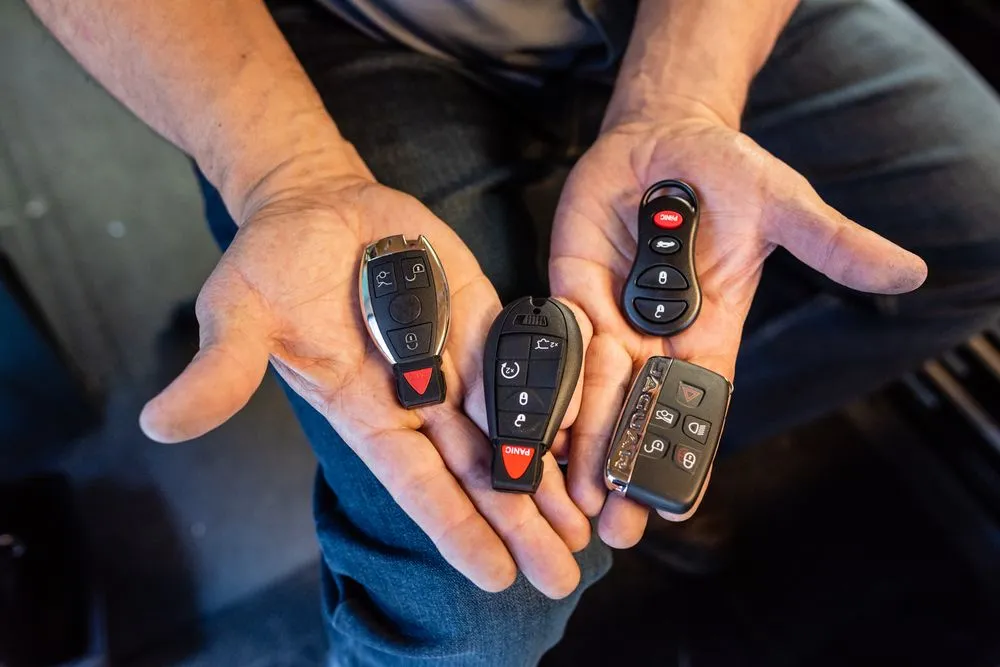
Why Aftermarket Fobs Are Not Always a Drop-In Replacement
Modern key fobs communicate with your vehicle’s immobilizer system, body control module, and security system through a precise set of frequencies and protocols that vary by manufacturer, model year, and sometimes by trim level. An aftermarket fob may share the same physical shape as your original and list your vehicle as compatible, but the internal chip, frequency range, or communication protocol may differ enough to prevent successful programming. Manufacturers like BMW, Audi, Toyota, and Ford each use distinct immobilizer technology, and aftermarket suppliers do not always replicate those specifications accurately.
The situation is even more complicated for push-to-start systems and smart keys. A mismatch in chip type or frequency means the vehicle will not recognize the fob as authorized, and the engine will not start. Car key programming for these systems requires equipment that reads your specific vehicle’s immobilizer data and writes the correct code to the replacement key, which a generic aftermarket product cannot always accommodate.
What Aftermarket Key Fob Compatibility Problems Actually Look Like
Symptoms vary depending on how far off the aftermarket fob is from your vehicle’s requirements. Common signs include:
- The fob will not enter programming mode at all, regardless of the instructions followed
- The fob appears to program but only works intermittently
- Certain functions work while others do not, such as the lock button responding but the trunk release failing
- The fob worked for a few days before stopping, pointing to a weak internal component or frequency drift
If your vehicle uses a rolling code system, where the fob and car exchange a new code each time a button is pressed, an aftermarket unit that does not support rolling codes correctly will fall out of sync quickly. Recognizing these patterns early prevents further frustration before the problem gets worse.
Can You Program an Aftermarket Fob Yourself?
Some older domestic vehicles allow a self-programming sequence using the ignition and fob buttons. For most vehicles produced in the last decade, self-programming is not an option because the immobilizer system requires a dedicated programmer to write the key data directly to the vehicle’s computer. Even when a self-programming sequence is technically possible, an aftermarket fob with the wrong chip type will fail the process regardless of how carefully you follow the steps. A professional using dealer-grade tools can confirm whether the fob is actually compatible before any programming begins. Mobile automotive locksmith service handles this on-site, without requiring a tow or a dealership appointment.
When an Aftermarket Fob Creates Bigger Problems
On some vehicles, repeatedly attempting to program an incompatible fob can trigger a security lockout that limits the number of key programming attempts allowed within a set time window. Once that limit is reached, the vehicle will not accept any new key programming until a locksmith with the right tools resets the counter. This is especially common on vehicles with advanced anti-theft systems, including many German models and newer domestic trucks and SUVs.
If you have already attempted to program an aftermarket fob several times without success, stop before you exhaust any remaining programming attempts. For vehicles where the standard programming window is already closed, EEPROM services may be the right path forward, working directly with the vehicle’s stored security data to restore the system’s ability to accept a new key.
What a Mobile Locksmith Does Differently
When we arrive at your location, the process starts with a clear diagnosis. We confirm your vehicle’s year, make, model, and trim, identify the correct key type and fob specifications, and determine whether the fob you have is genuinely compatible or whether a different replacement is needed. Programming is done using advanced automotive tools that follow manufacturer-recommended procedures, and the fob is tested fully before the job is considered complete.
We recently helped a customer who had purchased an aftermarket fob for a domestic vehicle and spent several days trying to get it to program using online instructions. After confirming the fob’s chip type did not match what the vehicle required, we sourced a compatible replacement and completed the programming on-site. For drivers in Boynton Beach, Delray Beach, and nearby communities, that kind of on-site resolution makes a real difference.
How to Avoid Aftermarket Key Fob Problems in the First Place
Before purchasing any aftermarket fob, confirm compatibility with a professional. Knowing your vehicle’s year, make, model, trim, and key type gives us enough information to tell you upfront whether an aftermarket option is viable. If you already have a fob that is not working, follow these steps:
- Stop attempting to program the fob to avoid triggering a security lockout
- Note which steps you have already tried so nothing is repeated unnecessarily
- Contact a mobile locksmith who can assess the situation with the right diagnostic tools
Get the Right Fob the First Time
Aftermarket key fob compatibility problems are frustrating, but they are diagnosable with the right equipment and experience. Key N Go Mobile Locksmith serves drivers throughout Boynton Beach, Boca Raton, Delray Beach, West Palm Beach, and Lake Worth Beach with on-site automotive key and fob service. Before you order another fob or attempt another programming sequence, contact us to confirm what your vehicle actually needs. We diagnose the issue, explain the plan in plain language, and confirm the price before any work begins. No hidden fees, no towing required for most jobs. Hablamos Español.